
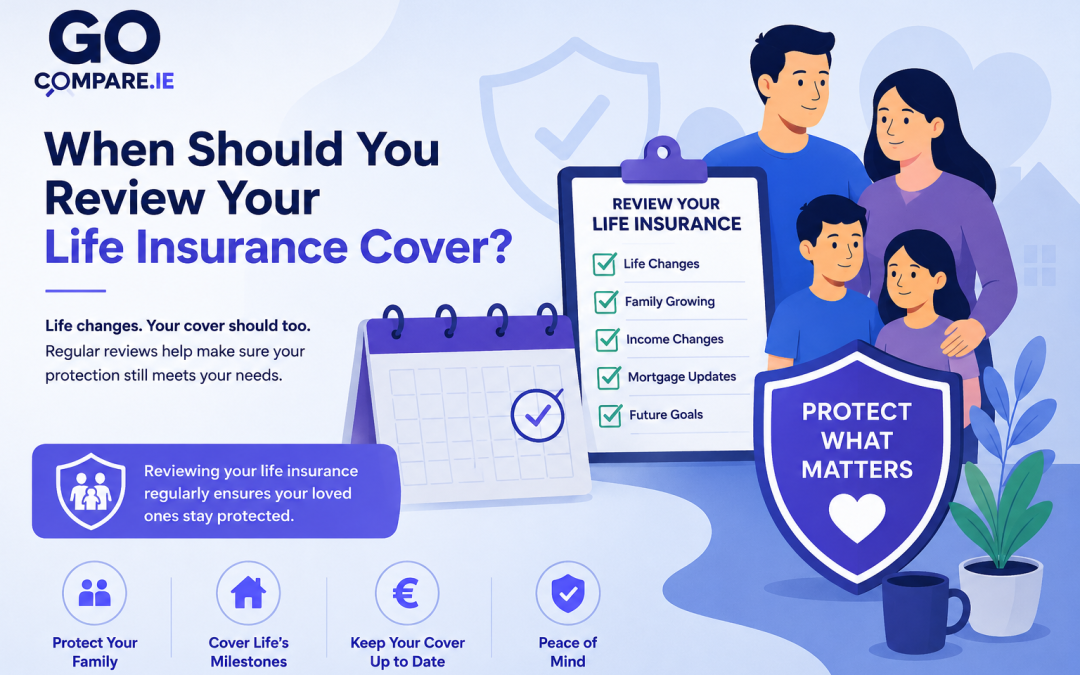
Many people take out Life Insurance and then forget about it for years.
However, life changes and your cover should change too.
Key Life Events That Should Trigger A Review
| Life Event | Review Your Cover? | Why |
|---|---|---|
| Buying a Home | ✅ | Mortgage responsibilities increase |
| Getting Married | ✅ | Financial commitments change |
| Having Children | ✅ | Dependants need protection |
| Changing Jobs | ✅ | Income and benefits may change |
| Salary Increase | ✅ | Existing cover may be insufficient |
| Paying Off Mortgage | ✅ | Protection needs may reduce |
How Often Should You Review Your Cover?
As a general rule, reviewing your Life Insurance every two to three years is a sensible approach.
You should also review cover whenever a major life event occurs.
Could You Save Money?
Insurance providers regularly update their pricing and underwriting criteria.
Comparing quotes periodically may help you secure more competitive premiums.
Protect What Matters Most
Major life events such as buying a home, getting married, having children or changing jobs can affect the amount of Life Insurance you need.
Reviewing your cover regularly helps ensure your family remains financially protected.
Final Thoughts
Life Insurance should evolve alongside your circumstances. Regular reviews can help ensure your policy continues to provide the protection your family needs.
Frequently Asked Questions About Life Insurance
How often should I review my Life Insurance?
Every two to three years or after a major life event.
Should I review my cover after getting a mortgage?
Yes. Taking on a mortgage often increases your financial responsibilities and may require additional cover.
Can I reduce my Life Insurance cover?
Yes. If debts decrease or your circumstances change, your protection needs may reduce.
Can reviewing my cover save money?
Yes. Comparing quotes regularly may help you find more competitive premiums.
Review Your Life Insurance Options Today
Not sure if your current cover is still right for you?
Compare Life Insurance quotes from Ireland’s leading providers and make sure your family remains financially protected.